
Metres to inches bridges the world’s default length unit with the one still used for precision and construction work in the US. International building plans, athletic marks, imported equipment dimensions, and overseas product listings all arrive in metres, and comparing them against imperial standards — or cutting to them with an inch-marked tape — means converting first.
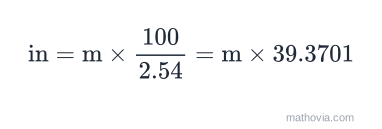
The metres to inches formula
To split into feet and inches:
Worked example
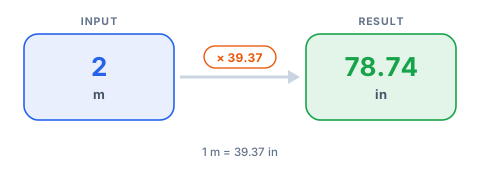
The calculator’s default is 2 metres.
As feet and inches:
so 2 metres is 6 ft 6.74 in — a shade under 6 ft 7.
What Your Results Mean
The Inches result is the total inch count for use in calculations or specifications that require a single unit. The Feet result converts to the more intuitive larger unit. The Remaining Inches (after subtracting whole feet) gives you the feet-and-inches format people actually use in conversation.
Height and clearance conversions
- Standard door height: 2.03 m = 79.92 in (approximately 6’8”)
- Ceiling height: 2.44 m = 96.06 in (approximately 8’0”)
- Tall person: 1.90 m = 74.80 in (approximately 6’3”)
- Basketball hoop: 3.05 m = 120.08 in (= 10’0”)
- Standard residential ceiling: 2.40 m = 94.49 in (approximately 7’10½”)
- Low ceiling: 2.10 m = 82.68 in (approximately 6’10¾”)
- Standard interior door: 2.00 m = 78.74 in (approximately 6’6¾”)
- Standard exterior door: 2.13 m = 83.86 in (approximately 7’0”)
- Kitchen counter height: 0.91 m = 35.83 in (approximately 36”)
- Dining table height: 0.76 m = 29.92 in (approximately 30”)
- Desk height: 0.74 m = 29.13 in (approximately 29”)
- Standard bathtub length: 1.52 m = 59.84 in (approximately 5 ft)
- Standard bed length: 1.90 m = 74.80 in (approximately 6’3”)
- Queen mattress length: 2.03 m = 79.92 in (approximately 6’8”)
- King mattress length: 2.03 m = 79.92 in (approximately 6’8”)
- Standard basketball backboard height: 3.05 m = 120.08 in (10 ft)
- Volleyball net height (men): 2.43 m = 95.67 in
- Volleyball net height (women): 2.24 m = 88.19 in
- Standard table tennis table height: 0.76 m = 29.92 in
- Tennis net height at center: 0.914 m = 35.98 in
- 1 meter: 39.37 inches
- 1.5 meters: 59.06 inches
- 2 meters: 78.74 inches
- 2.5 meters: 98.43 inches
- 3 meters: 118.11 inches
- 4 meters: 157.48 inches
- 5 meters: 196.85 inches
Architectural reference
International building codes use meters. US codes use feet and inches. When reviewing plans from metric countries, this conversion identifies whether a doorway (2.10 m = 82.68 in) meets US ADA requirements (minimum 80 inches clear opening). Close but not interchangeable.
For the reverse conversion, the inches to meters calculator converts imperial measurements to SI. If you need centimeter or millimeter precision, the cm to inches converter and mm to inches converter work at those scales. For feet-first conversions, the feet to inches calculator is more direct.
Metres to feet and inches
Convert to inches, then split off whole feet. For a height of 1.65 m:
So 1.65 m is about 5 ft 5 in once you round the 4.96.
Square metres
Area conversions square the factor. One square metre is about 10.764 square feet, or about 1,550 square inches. A 20 m² room is roughly
Common mistakes
- Reading 1.8 m as 1 ft 8 in. The decimal is tenths of a metre: 1.8 m is about 70.9 inches, or 5 ft 11 in.
- Mixing up the two factors. Multiply by 39.37 for inches and by 3.281 for feet.
- Rounding 39.37 to 40. That’s 1.6% high, enough to make a 2 m door frame look 1.3 inches taller than it is.