
Bridging a mechanical rating to an electrical supply
A motor’s nameplate is in horsepower — a mechanical output. The generator, transformer, or panel that has to feed it is rated in kVA — apparent electrical power. Getting from one to the other means walking backward through the motor: from shaft output, up through the internal losses to the real electrical input, then out to the apparent power the source must supply.
This is the calculation for sizing a standby generator to run a well pump, spec’ing a transformer for a shop’s largest machine, or checking whether an existing feeder can take a new motor.
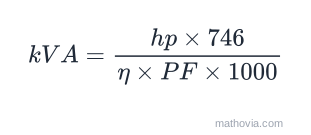
The horsepower to kVA formula
Worked example
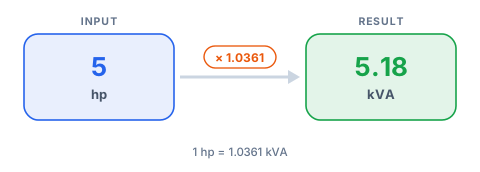
The calculator’s defaults are 5 hp, 90% efficiency, power factor 0.8.
Mechanical watts:
Electrical input (real power):
Apparent power:
So a 5 hp motor needs about 5.18 kVA of running supply — and a fair bit more headroom for its starting surge.
Approximate running kVA by motor size
At 88% efficiency, power factor 0.85:
| Motor | Running kVA | Suggested source (with start margin) |
|---|---|---|
| 1 hp | ~1.0 kVA | 3–5 kVA |
| 2 hp | ~2.0 kVA | 5–7 kVA |
| 5 hp | ~5.0 kVA | 10–15 kVA |
| 10 hp | ~9.9 kVA | 20–30 kVA |
| 15 hp | ~15 kVA | 30–45 kVA |
| 20 hp | ~20 kVA | 40–60 kVA |
| 25 hp | ~25 kVA | 50–75 kVA |
| 30 hp | ~30 kVA | 60–90 kVA |
| 50 hp | ~50 kVA | 100–150 kVA |
| 75 hp | ~75 kVA | 150–225 kVA |
| 100 hp | ~100 kVA | 200–300 kVA |
That’s where the everyday rule of thumb comes from: 1 hp is roughly 1 kVA of running load for a typical induction motor, so 10 hp in kVA is about 10 and 50 hp is about 50. Larger motors are usually a little more efficient than 88%, which pulls their kVA slightly below the table; small single-phase motors are less efficient and land above it.
The source column is deliberately generous: a direct-on-line motor start pulls three or more times the running kVA, and a generator has to hold its voltage through that without stalling. A soft starter or variable-frequency drive cuts that surge sharply, so motors started that way can sit closer to the low end of the range.
What the estimate assumes
Efficiency and power factor are nameplate values at full load. A lightly loaded motor runs at a worse power factor, which raises the kVA it demands. Use the actual nameplate figures, and add the starting-inrush margin, before committing to a feeder, transformer, or generator size.
Common mistakes
- Sizing a generator to the running kVA with no allowance for starting inrush.
- Multiplying by efficiency instead of dividing.
- Using the kW figure to size the alternator — the alternator is rated in kVA; kW sizes the engine.
For the reverse, use the kVA to horsepower calculator. For line current, see horsepower to amps.
Sizing for motor starting
Running kVA is only half the story. A motor started straight across the line can draw roughly five to seven times its running current for a second or two. Using typical values of 85% efficiency and a 0.85 power factor, a 5 hp motor needs about:
At around six times that during starting, the generator briefly sees more than 30 kVA. A soft starter or variable-speed drive can cut the starting surge to about two to three times running, which allows a much smaller generator.
Several motors on one supply
Add the running kVA of every motor that runs at the same time, then add the starting surge of the largest motor, assuming the others are already running. Starting the motors one at a time, largest first, keeps the peak demand down.